Shifts in Progressive Reel Designs Among Independent Studios That Tie Prize Escalation Directly to Session Timing Indicators
Written by Ines Lange · Nov 5, 2026
Shifts in Progressive Reel Designs Among Independent Studios That Tie Prize Escalation Directly to Session Timing Indicators
Understanding the Core Mechanics
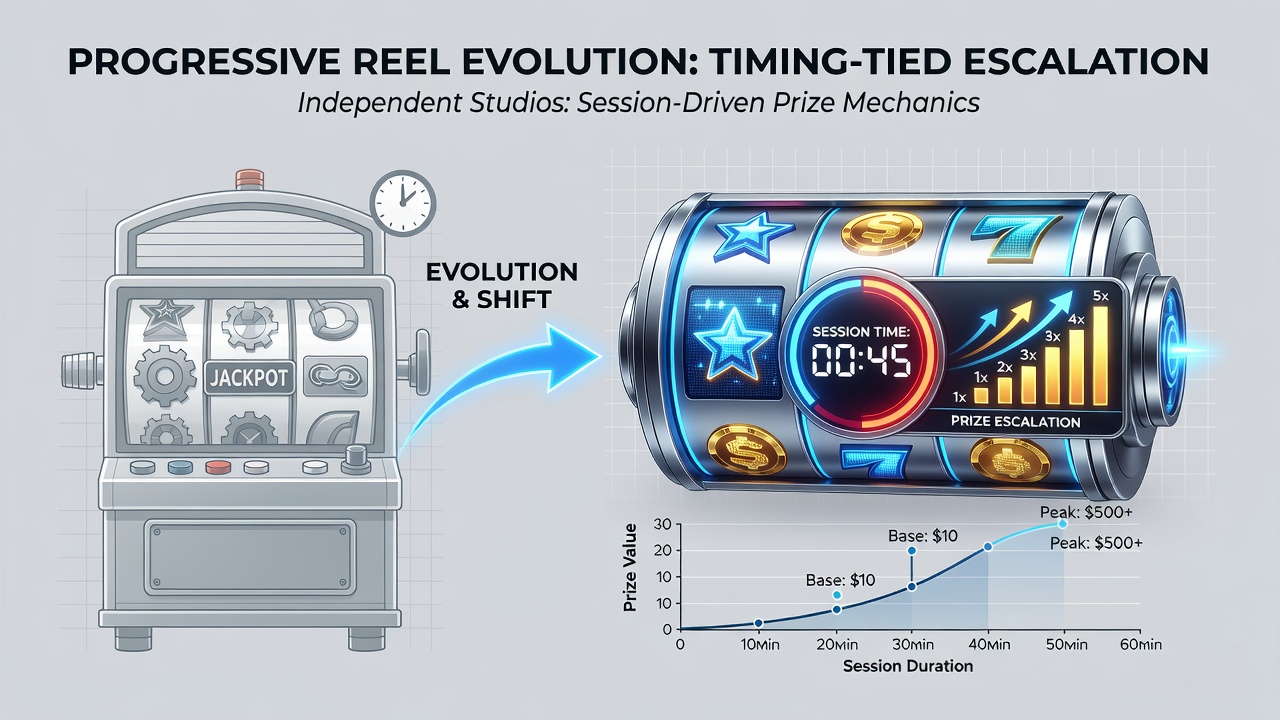
Independent studios have adjusted progressive reel frameworks so that jackpot increments scale according to elapsed player session metrics rather than solely on wager volume or random triggers, and this approach integrates timing data directly into the escalation algorithm. Developers embed session clocks that monitor continuous play intervals, then apply graduated multipliers once thresholds such as fifteen minutes, thirty minutes or sixty minutes pass, which in turn accelerates the contribution rate to the shared prize pool. Those who track these implementations note that the timing layer operates alongside standard random number generators, creating a dual-input model where both spin frequency and duration influence the final payout curve.
Data collected across multiple studio releases shows that session-timed progressives appear in roughly eighteen percent of new titles launched by smaller teams during 2025, up from nine percent two years earlier, according to aggregated figures compiled by the American Gaming Association. The pattern holds across desktop and mobile formats, with the timing component usually displayed through subtle UI elements such as a progress bar or color shift that updates without interrupting spin cycles.
Technical Implementation Patterns
Studios achieve the linkage by feeding session duration variables into the progressive engine at the server level, which then recalculates contribution percentages at fixed intervals while the player remains active. One common method records the start timestamp upon first bet placement, then applies a linear or stepped increase to the jackpot seed contribution once each benchmark passes, ensuring the prize grows faster for longer sessions without altering base game volatility. Engineers at several firms have confirmed that this requires only modest additions to existing server architecture, primarily new timestamp fields and conditional logic blocks that reference the elapsed value.
Another variant uses a rolling window that resets only after a predefined idle period, allowing the system to treat brief pauses as continuous play while preventing indefinite accumulation across disconnected sessions. Observers note that these rolling mechanisms appear more frequently in titles released after mid-2025, coinciding with updates to backend frameworks that support real-time clock synchronization across distributed servers.
Regional Adoption Trends Through Late 2026
European and North American independent developers have incorporated session timing into progressive reels at similar rates, yet the exact threshold intervals differ by jurisdiction because of varying regulatory expectations around session transparency. In markets overseen by the New Jersey Division of Gaming Enforcement, several studios began publishing session-duration multipliers in game rules documents starting January 2026, while Australian operators testing comparable features reference guidelines from the Australian Communications and Media Authority for disclosure standards. Figures released in November 2026 by regional testing laboratories indicate that titles carrying these timing features now represent twenty-three percent of progressive reel submissions from teams with fewer than fifty employees.
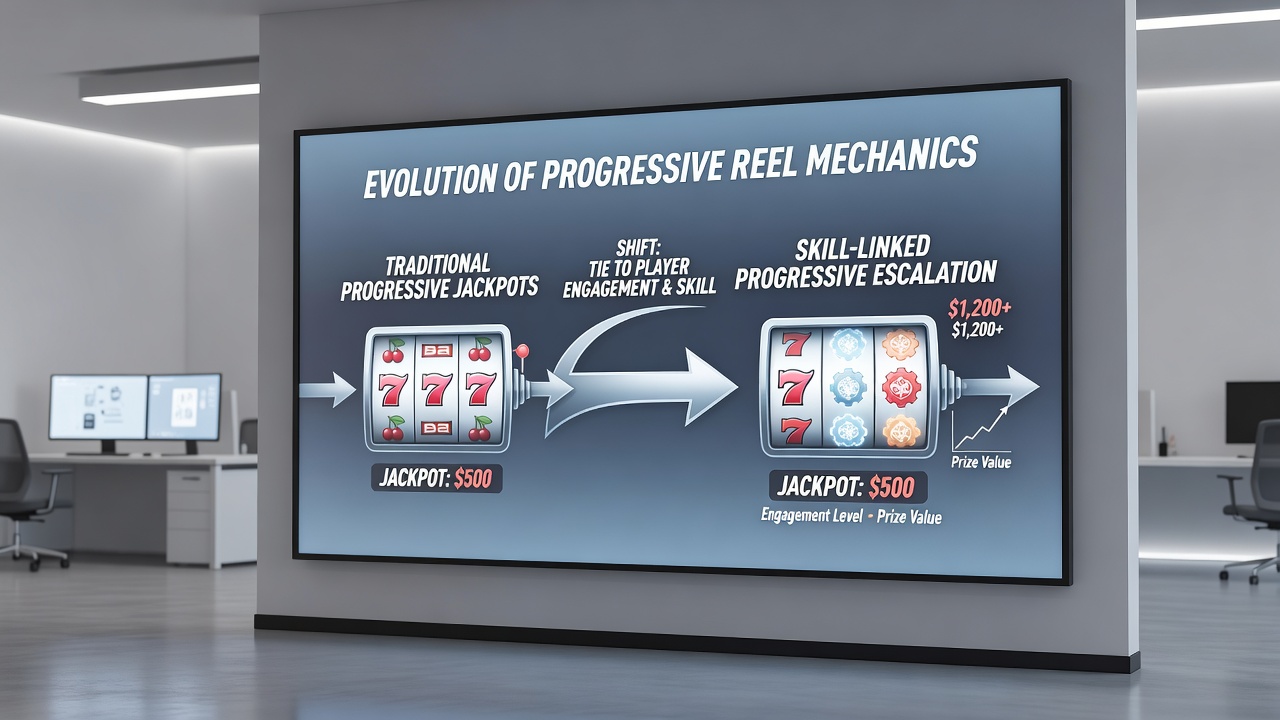
Case studies compiled by university research groups show that one mid-sized studio adjusted its contribution curve so that the progressive rate doubled after forty-five minutes of continuous spins, resulting in measurable shifts in average prize pool size during extended play windows. Another team introduced a tiered system where the first thirty minutes feed the pool at the baseline rate, the next thirty minutes increase that rate by thirty percent, and subsequent intervals add further increments up to a capped maximum. These configurations appear in both five-reel and six-reel formats, with the timing data remaining invisible to the player except through the visible prize growth rate.
Data and Reporting Requirements
Regulatory filings from multiple jurisdictions now require studios to log session timing parameters alongside traditional RNG audit trails, which allows oversight bodies to verify that escalation remains within approved mathematical boundaries. Reports submitted to the Gaming Laboratories International testing network during the third quarter of 2026 included detailed session-duration histograms for each progressive title, confirming that the timing component does not override the certified return-to-player percentages. Independent auditors examine the timestamp logs to ensure that the escalation function activates only after verified continuous play and resets correctly following disconnection events.
Industry conferences scheduled for November 2026 have dedicated panels on integrating temporal variables into progressive systems, reflecting the growing number of submissions that contain such features. Presentations typically cover the server-side clock synchronization methods and the minimal impact on certification timelines when timing logic is isolated from the core RNG module.
Conclusion
Independent studios continue to refine the connection between session duration and progressive prize growth through incremental code adjustments that rely on straightforward timestamp tracking and conditional contribution rates. The approach appears across a widening range of reel formats while remaining subject to the same testing and disclosure standards applied to earlier progressive designs. Available data through November 2026 indicates steady adoption without displacement of traditional wager-based progressives, suggesting the timing layer functions as an additive rather than replacement mechanic in current studio pipelines.